
UNDERWATER PELLETIZING GUIDE
Hole design is a process decision, not a number copied from an old drawing. Review resin behavior, throughput, heating and cutting together before specifying a replacement die plate.
A pelletizer die plate hole pattern controls how molten polymer is distributed and cut into pellets. Hole diameter, hole count, spacing and channel geometry all influence melt flow at the die face. A plate with more holes is not automatically a better plate: the useful design is the one that delivers the required output with stable flow, predictable cutting and acceptable pellet uniformity.
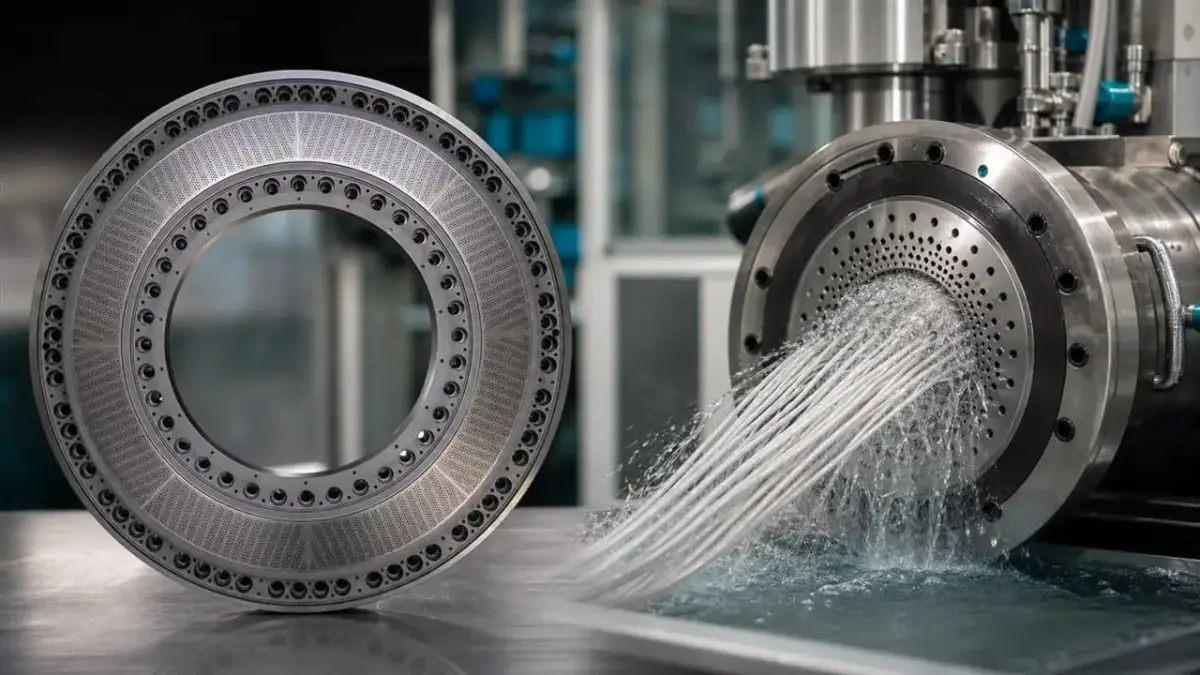
Begin With Required Flow, Not Hole Count Alone
Hole count is important, but it is only one part of the flow-area calculation. The required total open area depends on polymer grade, melt viscosity, target throughput, die pressure, melt temperature and the operating window of the pelletizer. Increasing hole count can improve distribution when the rest of the design supports it, but it also increases the requirements for heat transfer and knife contact across the full die face.
For an underwater pelletizer, every active hole should deliver a stable melt stream. When a group of holes runs cooler, becomes partially blocked or receives less melt, pellet shape can become irregular even when the rest of the plate appears to be operating normally. A review should compare the full hole pattern with actual pellet samples and operating data.
How Hole Diameter Affects Pellet Size
Hole diameter contributes to the size of the melt stream, but final pellet dimensions also depend on cutter condition, knife pressure, water-side operation and die-face temperature. Smaller holes may require tighter temperature control and clean, stable melt. Larger holes can increase melt-stream size and cutting load. The right selection should be based on the required pellet specification rather than outside diameter alone.
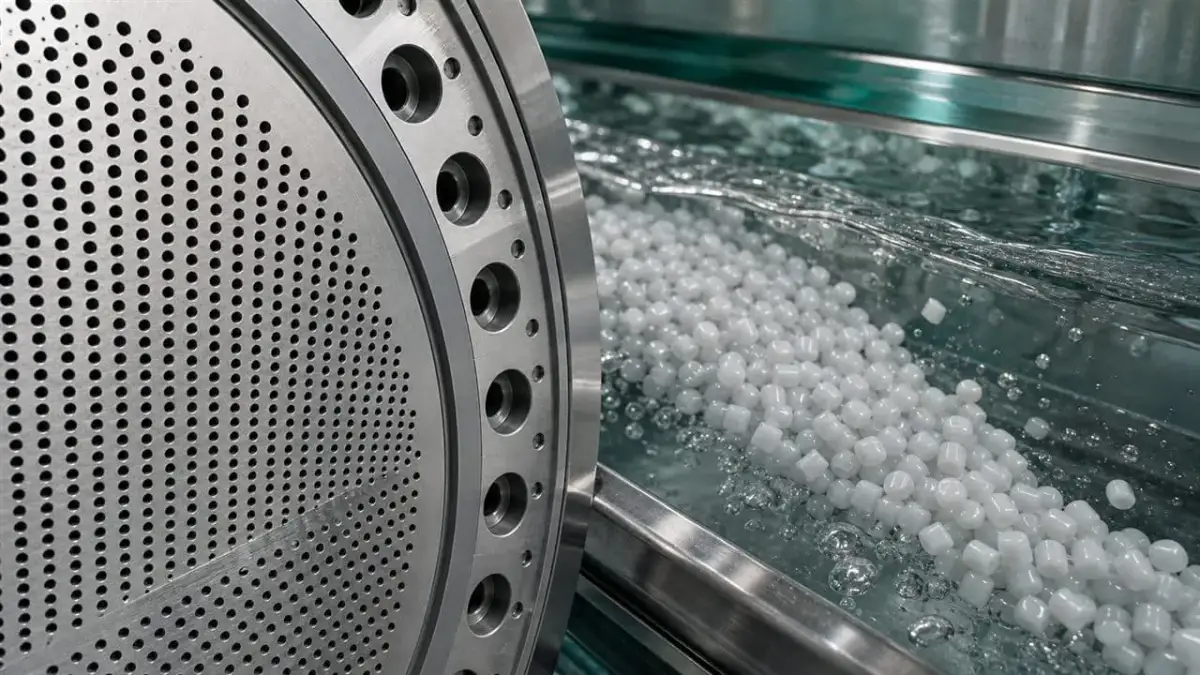
Review Heating and Knife Matching
Spacing and layout influence the thermal load across the die face. If heating is uneven, melt flow can vary by zone and create a visible change in pellet quality. The heating medium, utility conditions, insulation and internal channel design should all be reviewed before a replacement plate is ordered.
The pelletizing knife and the die plate form one cutting system. Blade geometry, material, contact pressure and wear condition can alter how the melt is cut. Replacing only one component may not resolve the underlying issue.
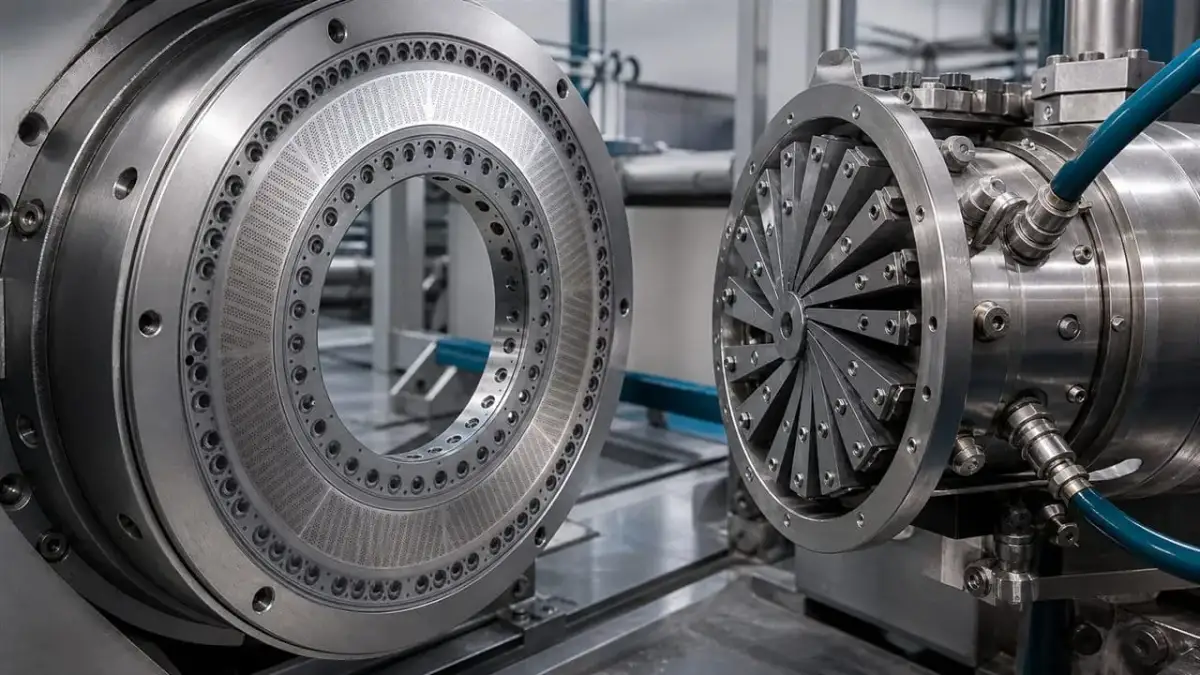
Questions to Review Before Ordering
- Current drawing, plate photos and pelletizer model
- Resin grade, melt conditions and target throughput
- Target pellet size and current pellet-quality symptoms
- Heating method and available utility conditions
- Knife type, wear history and cutter observations
Frequently Asked Questions
Can a new die plate copy the old hole pattern?
It can, but the existing pattern should first be checked against the current resin, output target and pellet-quality requirement.
Need a review of hole diameter, count or layout? Send your drawing and process data through the JINFENG contact page.