
Pelletizer knife problems should be diagnosed with evidence from the complete cutting system. The blade, die plate, installation and process conditions can all contribute to the same visible production symptom.
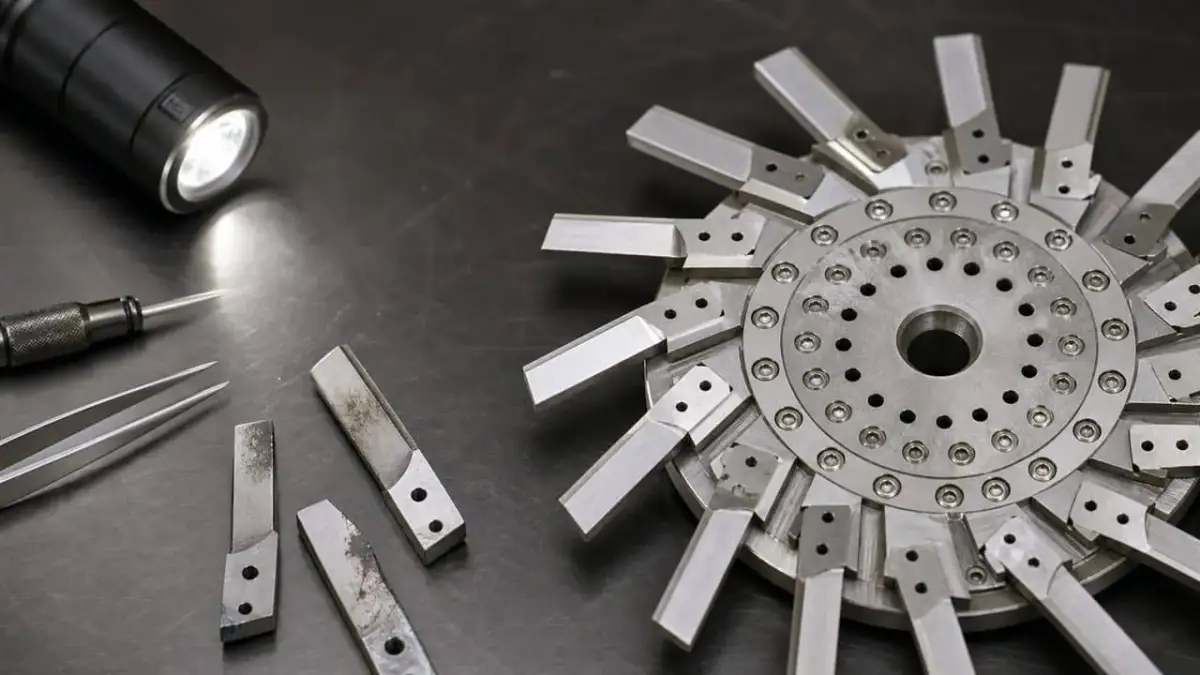
Common Symptoms and Checks
Uneven knife wear: inspect the mounting arrangement, cutting contact and die-face condition. Compare the wear pattern across the blade rather than looking only at one location.
Chipped or damaged edge: record the location of the damage, review the polymer and filler information, then inspect the die face and cutting setup for conditions that may be contributing.
Changing pellet shape or excess fines: check the knife edge, die-hole area, melt behaviour and any recent changes in throughput or temperature.
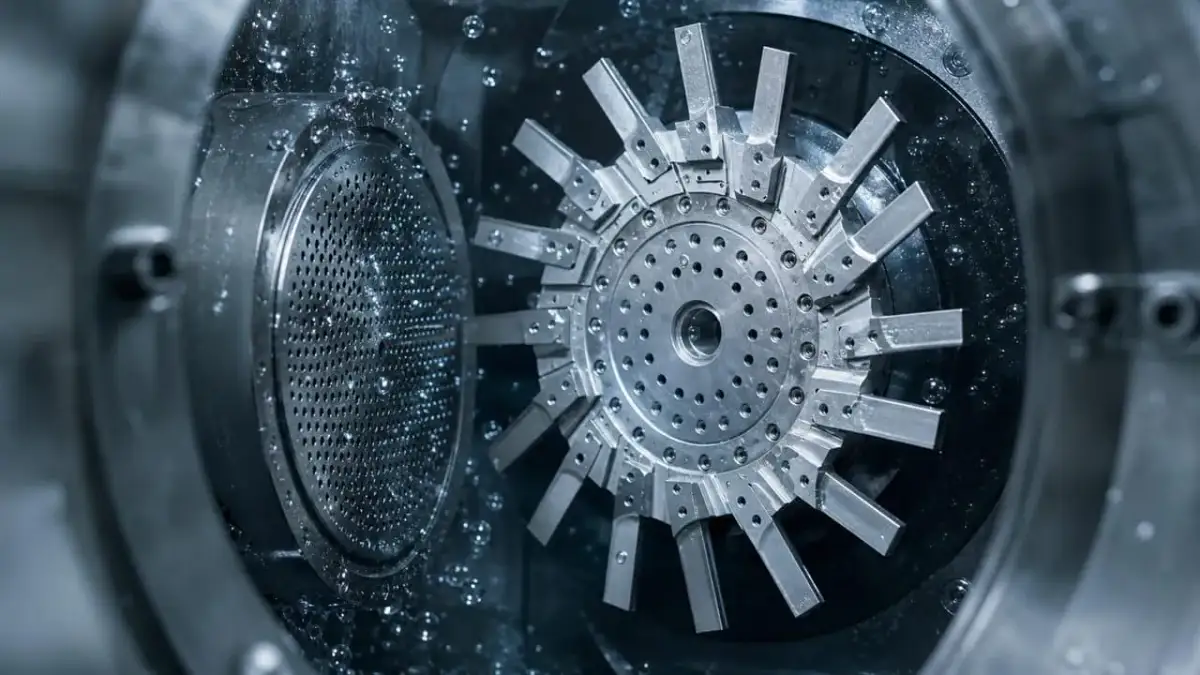
Build a Useful Corrective-Action Record
For each event, keep photos of the knife and die face, note the resin being processed, document the time of the issue and record changes made to the line. This makes recurring faults easier to compare and gives the technical team a more reliable basis for a recommendation.
- Describe the symptom and its production impact
- Photograph the blade edge and die face
- Record resin, fillers, temperature and throughput
- Note previous knife material and maintenance history
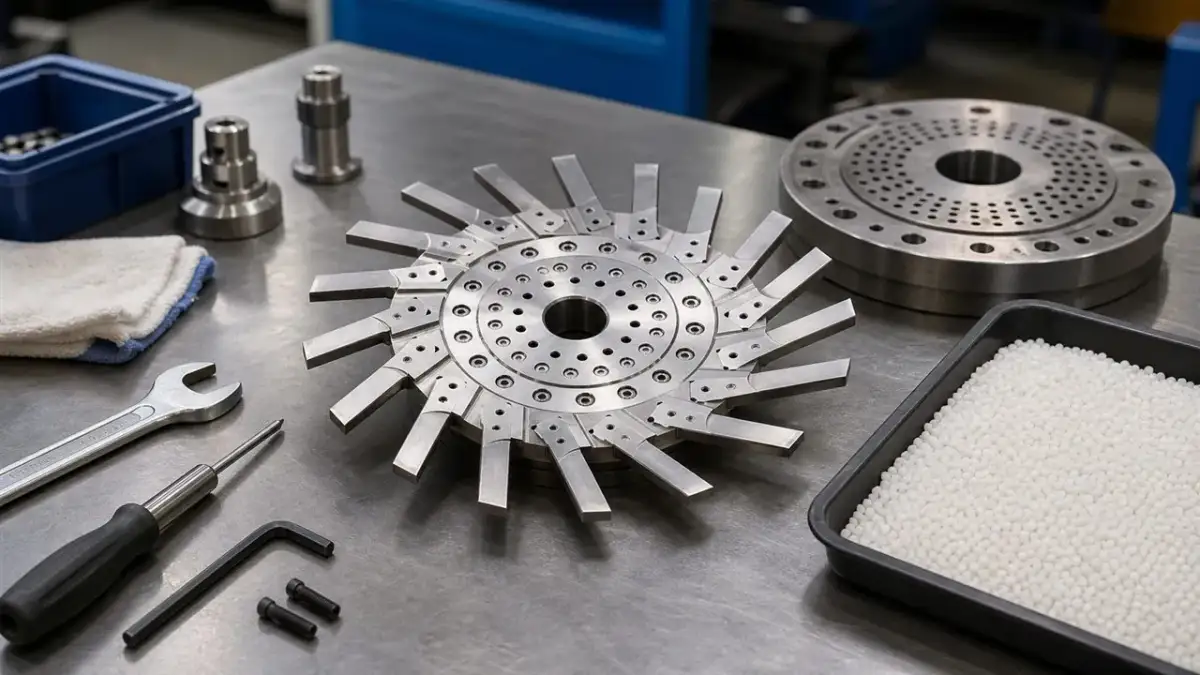
When to Request Technical Support
Request a review when the same problem reappears after a knife change, when wear changes unexpectedly or when the die plate may also be involved. Sending process information with photos is more effective than reporting only that a knife has worn quickly.
FAQ
Is a worn knife always the root cause of poor pellets?
No. The die plate, cutting conditions and polymer behaviour can also affect pellet quality.
What should I send when requesting support?
Share photos, dimensions, resin and process information, the current symptom and the history of previous corrective actions.