
TROUBLESHOOTING GUIDE
The visible symptom is useful, but it is not always the root cause. Review the die plate, heating, melt conditions, knife assembly and water-side operation together.
Underwater pelletizer die plate problems often appear as poor pellet uniformity, blocked holes, unstable flow, leakage or rapid knife wear. These symptoms may originate at the die plate, but they can also be connected to the heating system, melt condition, cutter settings or water-side operation. A structured diagnosis prevents a temporary repair from hiding the actual cause.
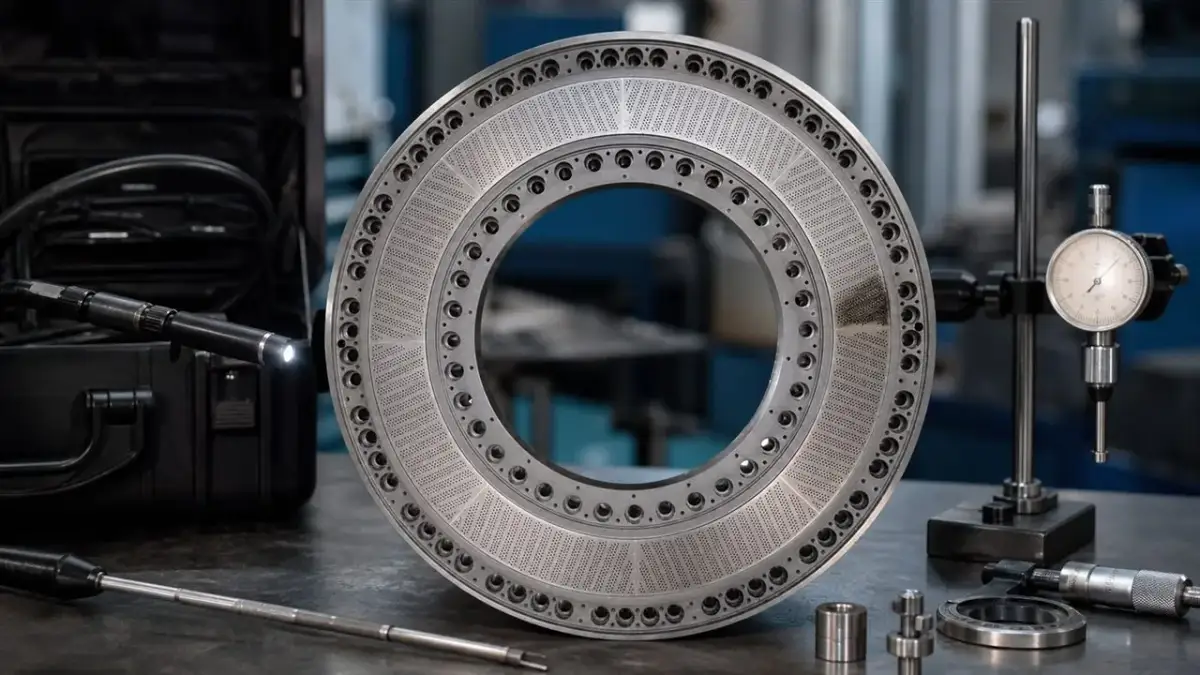
Uneven Pellet Size or Shape
Possible causes include uneven melt distribution, blocked or worn holes, temperature variation, knife wear or a mismatch between the die plate and cutting system. Compare the symptom across the whole die face rather than inspecting only the most visible area. Pellet samples, temperature trends and knife-wear patterns can reveal whether the problem is localized or system-wide.
Frequent Hole Blockage
Blockage can be related to contamination, insufficient temperature, poor flow balance or a hole configuration that no longer fits the resin. Cleaning can restore operation temporarily, but repeated blockage should trigger a review of the resin, melt conditions and plate condition. Documenting which holes block and under what operating conditions helps separate a process issue from isolated plate damage.
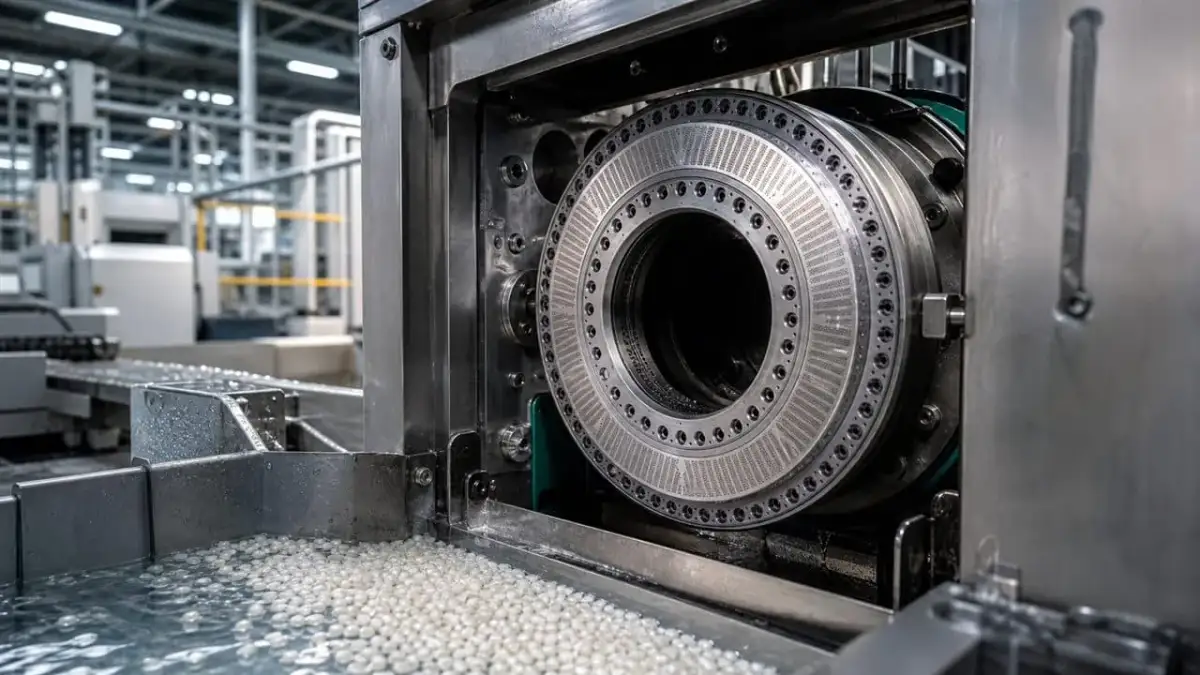
Leakage, Heating Instability and Knife Wear
Leaks and temperature variation may indicate seal wear, internal channel damage, insulation problems or an issue outside the plate. Rapid knife wear can point to cutter setup, abrasive material conditions or poor contact at the die face. Record pressure, temperature and the location of the symptom before deciding on repair or replacement. This makes a repair assessment far more reliable.
A Practical Diagnostic Sequence
- Collect pellet samples and note when the symptom occurs.
- Inspect the die-hole pattern, die face and cutter condition.
- Review melt, heating and water-side operating records.
- Photograph interfaces, leaks and any localized damage.
- Compare the findings with the drawing and production target.
Frequently Asked Questions
Should the pelletizing knife be inspected at the same time?
Yes. The knife and die plate operate together, and a worn or incorrectly matched knife can create symptoms that look like a die plate problem.
Send the operating symptom, plate photos and process data through the JINFENG contact page for a technical troubleshooting review.