
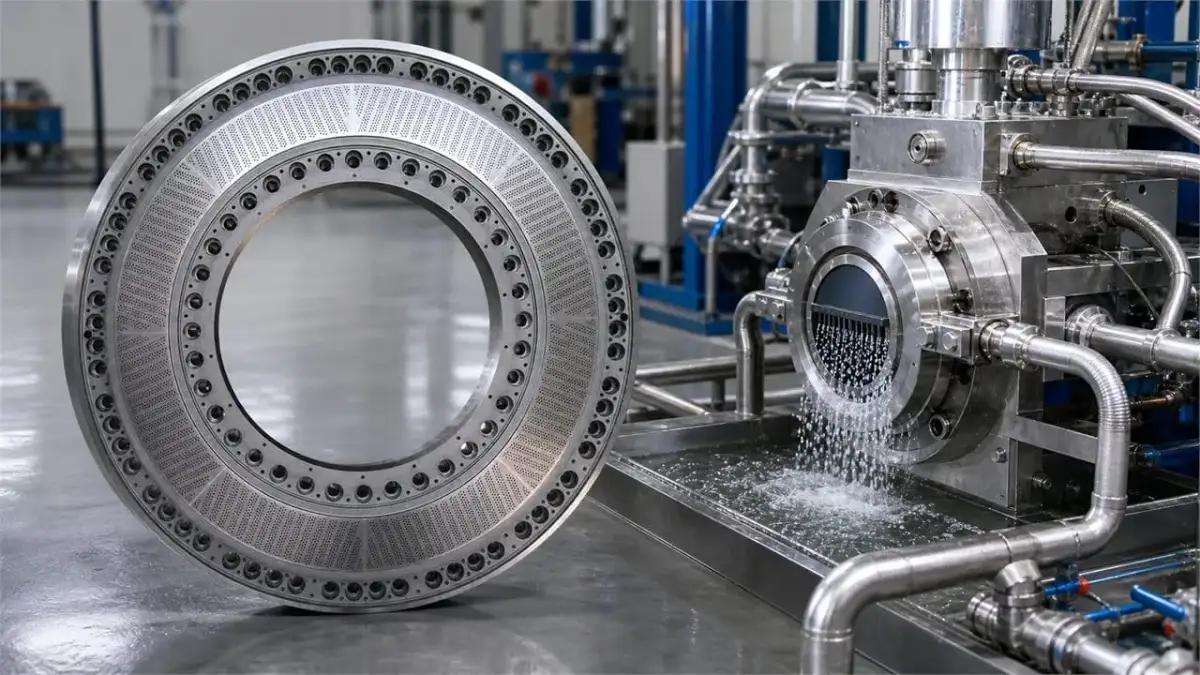
An underwater pelletizer die plate is not a standard spare part that should be selected by diameter alone. It is a heated, multi-hole component that shapes molten polymer before the material is cut into pellets under water. Its design influences melt flow, pellet shape, production stability, energy use and the service life of the cutting system.
For a new project, a capacity upgrade or a replacement die plate, the correct choice starts with process data. The resin grade, required throughput, pellet size, heating medium and the mechanical condition of the pelletizer all affect the final design. This guide explains the main factors that should be reviewed before ordering an underwater pelletizer die plate.
1. Start With the Resin and Production Target
The first question is not "What size die plate do I need?" It is "What process must the die plate support?"
Provide the resin grade, melt-flow characteristics, target pellet size and required annual or hourly output. PE, PP, ABS, PC, PS, EVA, SAN and masterbatch materials can place different demands on melt flow, die-hole geometry and heating control. A die plate designed for one operating condition may not perform well after a resin change or a major capacity increase.
For an accurate technical review, prepare the following information:
- Resin type and grade
- Required production capacity
- Target pellet size and acceptable shape variation
- Current operating pressure and temperature
- Heating medium and available utility conditions
- Pelletizer model, drawings or photographs of the existing die plate
This information helps the manufacturer recommend a die-hole pattern that supports stable flow instead of simply copying an old part.
2. Review Die-Hole Diameter, Hole Count and Layout
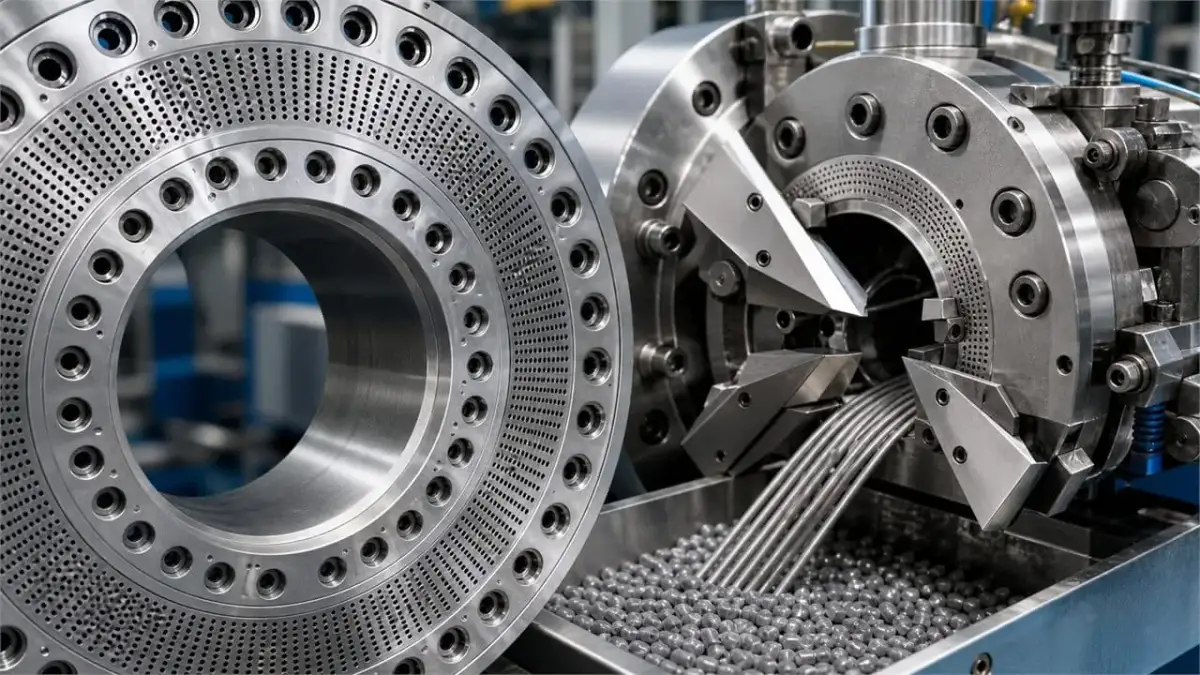
Die-hole design is one of the most important parts of an underwater pelletizer die plate. Hole diameter, number of holes and hole distribution work together to determine throughput and pellet size.
A larger number of holes can increase total flow area, but it also changes the heat balance, melt distribution and cutting requirements. Hole diameter must be selected with the polymer, pellet size, viscosity and operating conditions in mind. The hole layout should promote even melt distribution across the plate and reduce the risk of uneven pellet formation.
At JINFENG, die plates can be designed with 50 to 7,000 holes and hole diameters from 0.7 mm to 3.5 mm. These ranges are not a selection rule by themselves. The final configuration should be confirmed by process conditions and equipment constraints.
Questions to Ask About Die-Hole Design
- Is the current pellet size correct for the downstream process and customer requirement?
- Are pellets uniform across the entire die plate?
- Has the resin grade or production target changed since the current die plate was installed?
- Are there signs of blocked, worn or damaged die holes?
- Is the pelletizing knife matched correctly to the die plate?
For a complete cutting system review, see JINFENG's pelletizing knife solutions.
3. Match the Heating Method to the Production Line
The die plate must maintain stable temperature around the melt channels and die holes. Inadequate or uneven heating can contribute to poor flow, unstable pellets and difficulty during start-up or grade changes.
Common heating arrangements include steam heating and heat-transfer oil heating. The best choice depends on the existing equipment, process temperature, available utilities and control strategy. JINFENG die plates can be designed for steam heating up to 6 MPa or heat-transfer oil temperatures up to 300 C.
When evaluating heating, consider more than the maximum temperature. Ask whether the plate heats evenly, whether temperature control is stable across the working surface and whether the current system has recurring leakage, insulation or control problems. In some cases, the die plate and the heating system should be evaluated together.
4. Confirm Mechanical Limits and Installation Dimensions
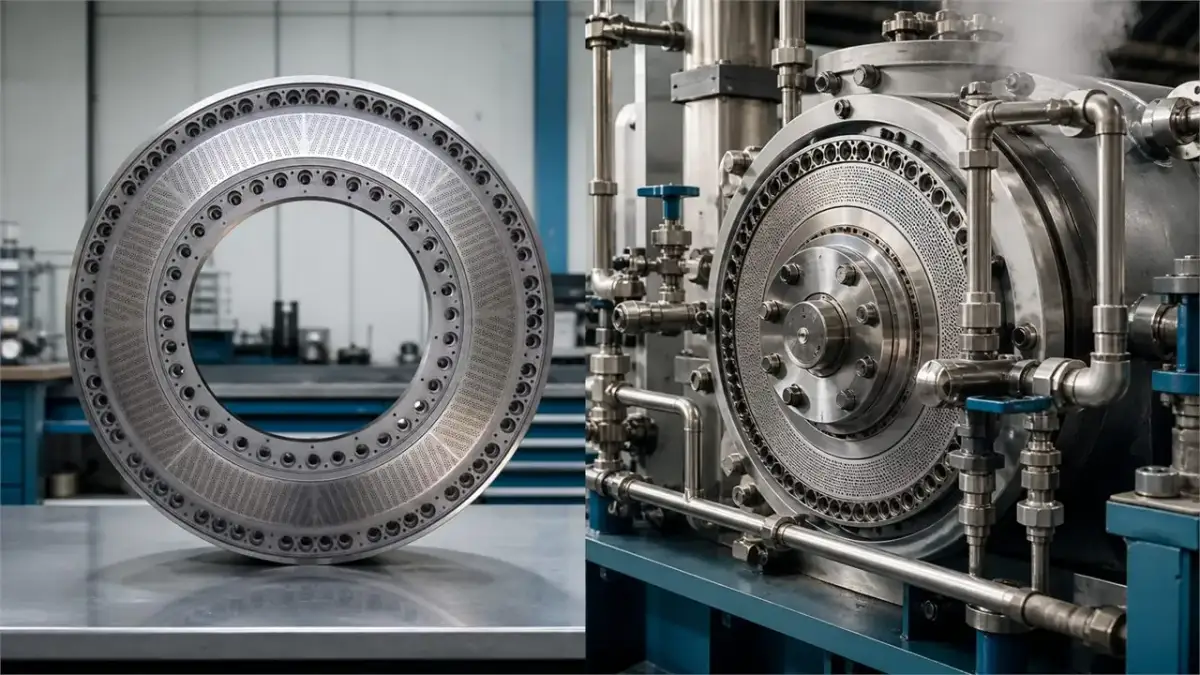
Before ordering a replacement die plate, confirm the physical and mechanical limits of the pelletizer. Important data includes outer diameter, thickness, mounting pattern, melt inlet arrangement, cutter interface and operating pressure.
JINFENG can manufacture die plates with outer diameters from 120 mm to 1,500 mm and working pressures up to 30 MPa. However, a replacement part must match the customer's actual pelletizer configuration. A drawing is the preferred reference. When a drawing is not available, accurate measurements, photographs and information about the equipment model can support the engineering review.
Do not assume that two plates with the same outer diameter are interchangeable. Differences in mounting dimensions, flow channels, heating passages or insulation-layer structure can affect installation and operation.
5. Consider the Condition of the Existing Die Plate
Not every operating problem requires a new die plate. A technical inspection can help determine whether repair, refurbishment or replacement is the more appropriate option.
Replacement may be appropriate when the plate has severe die-hole damage, major distortion, repeated heating problems or a design that no longer supports the required capacity. Repair may be considered when the core structure is sound and the problem is limited to correctable wear or damage.
JINFENG provides granulation die plate repair technology and technical support for operating pelletizing lines. Sharing process records, failure symptoms and images of the used plate helps make the assessment more reliable.
6. Select a Supplier That Can Review the Whole System
The best die plate supplier should understand both manufacturing and the pelletizing process. A die plate is connected to the melt distribution system, heating arrangement, cutter head, pelletizing knives and downstream pellet quality. A quotation based only on dimensions may not address the root cause of the customer's operating issue.
Ask the supplier whether they can review:
- Die-hole geometry and flow-channel design
- Heating medium and temperature requirements
- Thermal insulation structure
- Pressure and capacity requirements
- Knife and die plate matching
- Existing equipment drawings and site operating data
For high-output polymer pelletizing lines, this engineering review is especially important because small design differences can have a significant effect on production stability.
Underwater Pelletizer Die Plate Selection Checklist
Before requesting a quotation, prepare this checklist:
| Information to provide | Why it matters |
|---|
| Pelletizer brand, model and drawing | Confirms fit, mounting and interface dimensions |
|---|
| Resin grade and melt conditions | Supports die-hole and flow-path design |
|---|
| Required capacity | Determines total flow area and hole configuration |
|---|
| Pellet size requirement | Influences die-hole diameter and knife matching |
|---|
| Heating medium and temperature | Ensures the die plate matches the existing utility system |
|---|
| Current plate dimensions and photos | Helps assess replacement compatibility or repair feasibility |
|---|
| Operating problems | Identifies issues such as uneven pellets, blockage or wear |
|---|
Frequently Asked Questions
What is an underwater pelletizer die plate?
It is a heated multi-hole plate used in underwater pelletizing. Molten polymer passes through the die holes and is cut into pellets at the die face under water.
Can a replacement die plate be made from a sample or drawing?
Yes. Drawings are preferred, but a sample, accurate measurements, equipment information and process data can also support a custom replacement die plate review.
How do I choose the correct number of die holes?
The required hole count depends on resin properties, output target, pellet size, die-hole diameter, heating conditions and pelletizer configuration. It should be confirmed as part of an engineering review.
Why are pellet shape and size not uniform?
Possible causes include uneven melt flow, worn or blocked die holes, unstable heating, incorrect knife condition or poor matching between the die plate and the pelletizing knife. A complete system review is recommended.
Request a Technical Review
Send your drawing, pelletizer model, resin grade, capacity target and current operating issue. Our engineering team can review the die plate requirements and prepare a quotation.